
2026: How Cross-Border E-commerce Can Adapt to the New Normal of Platform Geo-blocking
2026: How Cross-Border E-commerce Can Adapt to the New Normal of Platform Geo-blocking
Over the past few years, the landscape of cross-border e-commerce has expanded rapidly, with social media platforms like TikTok and Facebook becoming indispensable battlegrounds for brands going global. However, an increasingly apparent trend is reshaping the game: platform scrutiny of user IP addresses based on geolocation is becoming unprecedentedly stringent. Particularly for sellers looking to deeply penetrate high-value specific markets (such as the US, Japan, and Europe), an IP address from a "non-local" region can easily mean restricted content distribution, rejected ad placements, or even outright account risk control.
This isn't just a minor technical inconvenience; it directly impacts the core of business – precisely reaching target customers. When your content cannot be seen by the people who genuinely want to see it, all marketing strategies and creative efforts become castles in the air.
The Real Pain Points of Cross-Border E-commerce: IP Addresses as an "Invisible Threshold"
For cross-border e-commerce operators, especially sellers focusing on TikTok Shop, Facebook Marketplace, or Instagram Shopping, the current challenges are multi-dimensional:
- Content Distribution Subject to "Geographic Discrimination": Platform algorithms increasingly favor distributing content to users whose IP geolocation matches that of the publisher. A TikTok video posted with a Chinese IP, no matter how high quality, will struggle to be pushed extensively to local US users, resulting in an extremely low ceiling for organic traffic.
- Account Security and Weight Crisis: Frequent IP switching and the use of data center proxies for logins are primary targets for platform risk control systems. Once flagged as "suspicious login," it can lead to traffic restrictions at best, and account suspension at worst, instantly wiping out accumulated followers and influence.
- Surge in Advertising Costs: Whether it's TikTok Ads or Facebook Ads, the stability of ad accounts is strongly correlated with IP addresses. Creating or managing ad accounts using IPs from non-target regions may not only lead to failed ad approvals but also drive up click costs due to a "low-quality traffic" label.
- Impeded Market Research and Competitor Analysis: Want to understand the latest strategies of US domestic competitors on TikTok? Want to browse Japanese Facebook groups as a regular user? Geo-restrictions make these fundamental market intelligence gathering tasks exceptionally difficult.
The root cause is that platforms are striving to create a more "localized" community experience, and a genuine, stable local IP address has become the gold standard for verifying "authenticity."
Why Do Common Mitigation Strategies Frequently Fail?
In the face of these restrictions, sellers have tried various methods, often falling into new predicaments:
- Using Free or Cheap Proxies: This is the riskiest option. Such IPs are typically abused by a large number of users, have long been blacklisted by platforms, and are highly prone to leading to account association and bans. Speed and stability are also unassured.
- Relying on VPN Tools: While they can quickly switch geographic locations, most mainstream VPN IPs are shared and data-center in nature, with obvious characteristics that can still be identified and blocked by platforms. Furthermore, VPN IP pools are limited, insufficient for multi-account, refined operations.
- Building Own Overseas Servers or VPS: This provides data center-level IPs. However, for e-commerce and social media operations, the network environment of data center IPs differs significantly from that of real residential users. They raise suspicions of "non-human" to platform algorithms and are not a long-term secure solution.
| Method | Advantages | Disadvantages | Risk Level |
|---|---|---|---|
| Free/Cheap Proxies | Extremely low cost | Slow speed, unstable, extremely high probability of being blacklisted | Very High |
| Commercial VPNs | Easy to use, fast switching | IPs are data center in nature, easily identified, small pool | High |
| Self-built VPS/Servers | High control, dedicated IP | Single IP type (data center), higher cost, complex maintenance | Medium |
| Target Market Native IPs | High authenticity, high stability, high platform trust | Requires professional service providers, incurs costs | Low |
The core conflict lies in: you need the ability to "blend in" among millions of real users in your target market, not just to "disguise" a geographical location. Platform risk control systems have evolved to distinguish whether an IP comes from a home broadband connection or a data center.
The Key to Breaking Through: Embrace the "Native Residential IP" Mindset
A more sensible approach should revert to the original intent of platform review mechanisms: determining if the account behind is a real local user. Therefore, the solution's logical chain becomes clear:
- Identify Core Need: I need to interact with the platform as a "real local user."
- Find Key Elements: What can prove "real local user" status? The answer is: IP addresses assigned by local Internet Service Providers (ISPs) to real residences.
- Assess Available Resources: It is difficult for individuals to acquire and maintain real residential IPs in bulk overseas. This requires professional service providers with a vast, distributed IP resource pool capable of providing stable, clean connections.
- Integrate into Workflow: How can these IPs be seamlessly and securely applied to daily account management, content publishing, ad placement, and data analysis?
This thought process leads us to a professional solution: utilizing a global, high-quality native residential IP proxy network. The key value of such services lies in providing each IP as if it were a network identity "borrowed" from a household in the target city, maximally simulating the network environment of local users, thereby effectively circumventing IP-based geo-restrictions.
In Real Operations, How Does Stable IP Create Value?
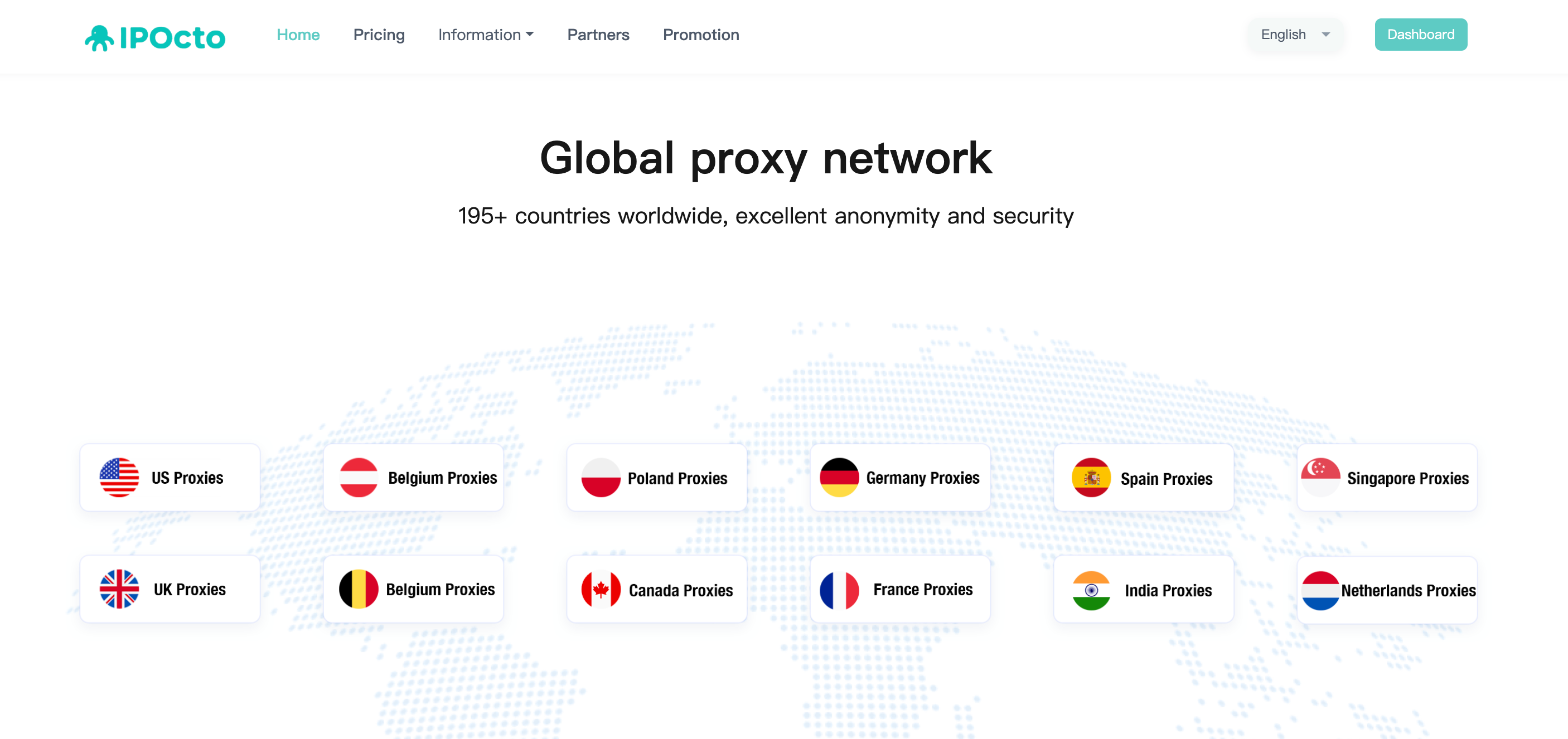
Consider a cross-border e-commerce company specializing in outdoor products targeting the US TikTok market. Before and after adopting a solution based on native residential IPs (such as the services provided by IPOcto), its workflow has undergone significant changes:
Scenario: Operating a Matrix of US Domestic TikTok Accounts
- Before: The operations team used fixed VPNs to log into multiple accounts. Soon, accounts began showing "traffic decline" and "unable to run ads" notifications. A single IP fluctuation caused three main accounts to be banned simultaneously, resulting in heavy losses. During market research, they still saw "international version" content recommended based on their Chinese IPs, unable to gain insight into US domestic trends.
- Now: By configuring professional proxy services, each TikTok operation account is assigned an independent, stable US static residential IP. These IPs come from real US ISPs like Comcast, AT&T, etc.
- Content Publishing: After publishing a video, the system recognizes the publisher as a "real user in California," and the content is preferentially recommended to users on the US West Coast interested in outdoor sports, leading to significantly improved engagement rates and conversion rates.
- Account Management: Each account logs in within a fixed IP environment, exhibiting stable behavior patterns. Account influence can be accumulated long-term, eliminating risk control issues due to abnormal logins.
- Ad Placement: Ad accounts are created and managed within a clean local IP environment, leading to a significant increase in approval rates. Ad placement data (such as user demographics) also becomes more accurate.
- Competitor Analysis: Operations staff can switch to IPs from different states at any time, browsing competitor accounts, trending videos, and hashtags from a local perspective to obtain first-hand market intelligence.
The core of this change is transforming the technical infrastructure from a "stumbling block" into an "accelerator." Professional global IP proxy services play a crucial role as an "infrastructure provider," ensuring that cross-border e-commerce companies can break through network boundaries safely, compliantly, and efficiently, focusing on what they do best – products and marketing themselves.
Conclusion: Placing Compliance and Security at the Core of Growth
The competition in cross-border e-commerce in 2026 and beyond will be characterized by refinement, localization, and compliance. The room for simply "skillfully" bypassing platform rules is shrinking. Operational strategies built on a foundation of genuine, stable technical infrastructure will gain longer-term vitality.
Addressing the increasingly stringent geo-restrictions of platforms like TikTok and Facebook is essentially a race for "digital identity authenticity." Choosing a service that can provide massive, clean, target-market native IP resources is not just about solving an access problem; it's about building a reliable moat for your overseas business. It will help your team think, act, and grow like a true local enterprise, ultimately achieving precise content distribution and maximizing commercial value.
Frequently Asked Questions FAQ
Q1: Is using a residential IP proxy service legal and compliant? A: Yes, using residential IP proxy services is inherently a legal technical tool, widely applied in commercial scenarios such as market research, ad verification, and SEO monitoring. The key lies in its use. Employing it for legitimate commercial activities that comply with platform terms of service (such as managing multiple compliant social media accounts or conducting localized market analysis) is compliant. No service should be used for fraudulent activities, scraping protected data, or violating explicit platform rules.
Q2: Static Residential IP or Dynamic Residential IP, which is more suitable for social media operations? A: For scenarios that require long-term maintenance of account influence (e.g., main TikTok, Facebook accounts), static residential IPs are more suitable. They provide a fixed identity marker, consistent with the characteristics of real users using the same network environment long-term, greatly reducing risk control risks. Dynamic residential IPs are more suitable for scenarios requiring frequent identity changes, large-scale data collection, or testing.
Q3: How can I determine if the IP quality provided by a proxy service is sufficiently "clean"? A: You can focus on the following points: Does the service provider clearly state the IP type (residential ISP)? Is there an IP cleaning and rotation mechanism to ensure a low abuse rate? Does it offer trial or small-traffic test packages, allowing you to personally verify the IP pass-through rate on target platforms (like TikTok)? And what is the service provider's industry reputation and history?
Q4: Do I need to configure an independent IP for every operational account in my team? A: It is strongly recommended. This is one of the golden rules of multi-account social media operations: "one account, one IP, one environment." Isolating different accounts under different clean IPs effectively prevents cross-account risks due to IP association, forming the basis for securing your account matrix.
Q5: Besides social media operations, in which other aspects of cross-border e-commerce can such global IP services be useful? A: The application scenarios are very broad: including, but not limited to – independent website access testing (ensuring normal loading speeds worldwide), competitor price monitoring (viewing competitor website pricing as a local user), SEO ranking checks (viewing the real search rankings of a website in different countries), payment risk control testing (verifying payment gateway performance in different regions), and overseas public opinion monitoring, etc. It essentially provides businesses with a "window" into any digital market globally.